
Building Two Bilingual Responsive Websites for a Multi-Domain Brand Presence
TrustAds needed a professional web presence across two separate domains.
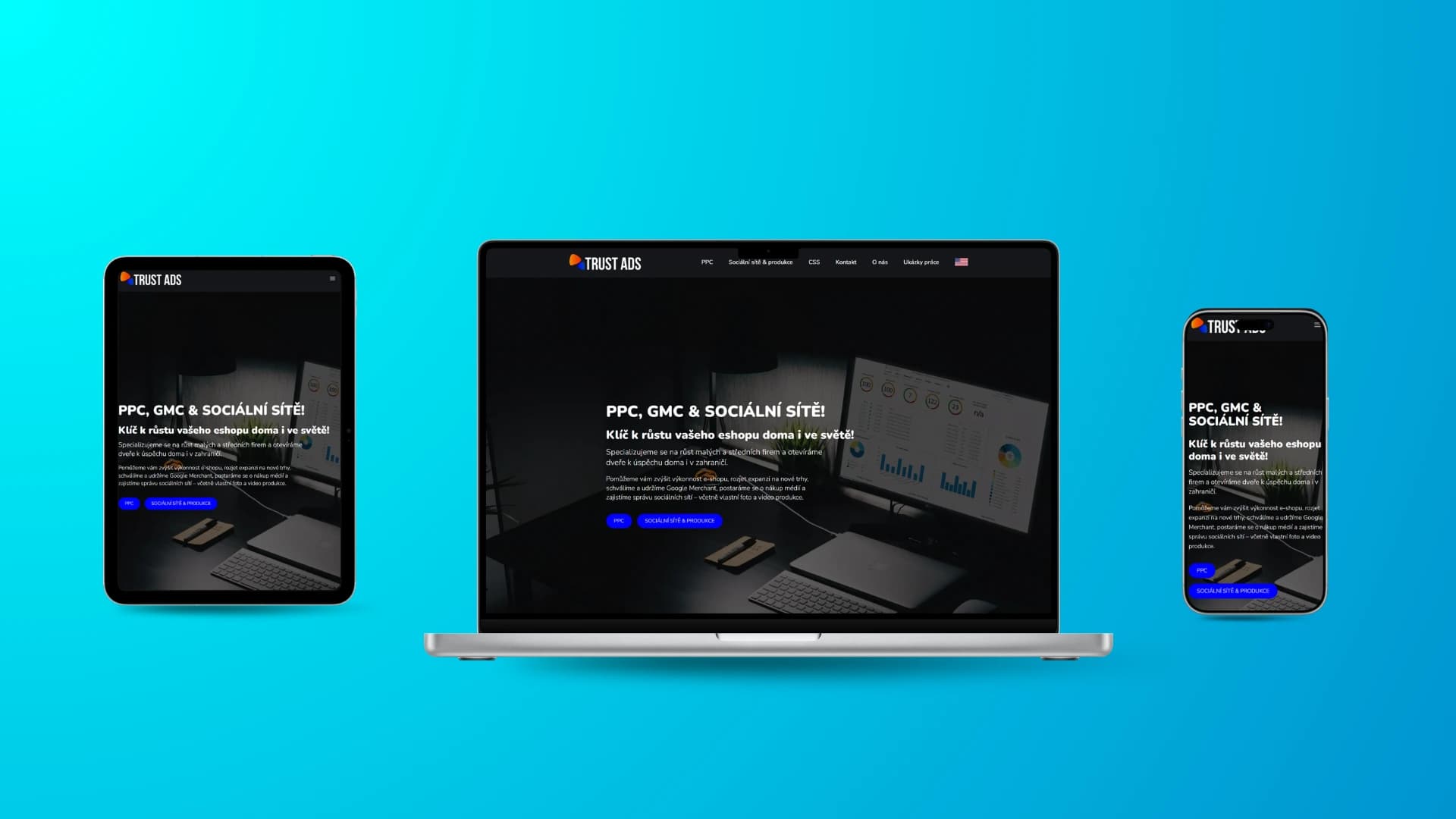
The project required more than creating one standard website. The goal was to build two responsive websites, both with bilingual content, each operating under its own domain while still maintaining a consistent and professional brand presentation.
My role was to help create and implement both websites with a focus on responsive layout, clear structure, bilingual presentation, domain-specific setup, and a smooth experience across devices.
The project required practical web execution, multilingual structure, visual consistency, and attention to how the brand would be presented across two separate online touchpoints.
The Challenge
TrustAds needed two separate websites instead of one single digital presence.
Each website had to work under a different domain, while both needed to support two language versions.
That created a more complex structure than a basic company website.
The challenge was not only to make the websites look good, but also to make sure that both versions were clear, responsive, consistent, and easy to navigate.
The project needed to:
- create two separate websites
- make both websites fully responsive
- support bilingual content on both websites
- keep the brand presentation consistent
- adapt the structure to two different domains
- make the websites easy to browse on mobile and desktop
- organize content clearly across language versions
- avoid visual inconsistency between the two websites
- create a professional digital presence for the brand
The websites had to feel connected, but still function independently under their own domains.
The Solution
I helped create two responsive bilingual websites for TrustAds.
The websites were structured to work clearly across desktop, tablet, and mobile devices, with layouts that adapted properly to different screen sizes.
Because both websites were bilingual, the content structure had to support two language versions without making the user experience confusing.
The solution focused on:
- responsive website implementation
- bilingual content structure
- clear page hierarchy
- domain-specific website setup
- consistent brand presentation
- mobile-friendly layouts
- simple navigation
- clean visual hierarchy
- usable structure across both websites
Instead of treating the second website as a quick duplicate, the project required thinking through how both websites should work as separate but connected digital assets.
Two Separate Websites
A key part of the project was that TrustAds needed two websites, not just one.
Each website had its own domain and had to function as an independent online presence.
This meant that the structure, deployment, content, and user experience had to be handled separately while still preserving a coherent brand feeling.
The two-website setup supported:
- separate domain positioning
- independent website access
- clearer structure for each web presence
- more flexible brand communication
- better control over each online touchpoint
- a more professional multi-domain setup
This gave TrustAds a stronger digital foundation than relying on one generic website for everything.
Bilingual Website Structure
Both websites were built with bilingual content.
This required more than simply placing translated text on the page.
The websites needed a clear structure where users could understand which language version they were viewing and move through the content without friction.
The bilingual setup focused on:
- clear language separation
- consistent content structure
- readable multilingual layouts
- language-aware navigation
- balanced visual presentation across languages
- avoiding layout issues caused by different text lengths
Bilingual websites can quickly become messy if the structure is not handled properly.
For TrustAds, the goal was to keep both language versions clean, readable, and visually consistent.
Responsive Web Experience
The websites were designed and implemented to work smoothly across devices.
This was important because users may visit the websites from mobile phones, tablets, laptops, or desktop screens.
A responsive website needs to preserve clarity and usability regardless of screen size.
The responsive implementation focused on:
- mobile-friendly layouts
- clear section order
- readable typography
- proper spacing across devices
- navigation that works on smaller screens
- consistent user experience
- professional presentation on desktop and mobile
This helped make both websites more reliable as business-facing digital assets.
Brand Consistency Across Domains
Because the project involved two separate domains, brand consistency was an important part of the work.
The websites needed to feel connected even though they were not hosted under one single domain.
That meant keeping the visual direction, layout logic, tone, and structure aligned across both websites.
The brand consistency work focused on:
- consistent visual presentation
- similar layout principles
- clear brand recognition
- professional digital appearance
- structured content hierarchy
- a unified feeling across both domains
This mattered because users should be able to recognize that both websites belong to the same broader brand environment.
At the same time, each website still needed to stand on its own.
Content Structure & User Flow
The content had to be structured clearly across both websites and both language versions.
For business websites, visitors usually need to understand the offer quickly.
They do not want to search through unclear sections or inconsistent navigation.
The content structure focused on:
- clear page flow
- simple navigation
- logical section order
- easy-to-understand messaging
- clean bilingual presentation
- fast access to key information
- reduced friction for visitors
The goal was to make the websites easy to understand and easy to browse.
Technical & Domain Setup
The project also involved handling the websites as separate domain-based web properties.
Each website needed to work properly under its own domain, which required a clean technical setup and attention to deployment details.
The technical setup supported:
- two separate domain environments
- independent website access
- stable public-facing websites
- proper routing for bilingual content
- responsive implementation
- reliable website delivery
This gave TrustAds a more structured digital setup and made both websites easier to present externally.
What Was Delivered
The cooperation included:
- two separate websites for TrustAds
- two different domains
- responsive web implementation
- bilingual structure for both websites
- language-aware website content
- clear website hierarchy
- mobile-friendly layouts
- desktop-friendly presentation
- consistent brand direction
- structured navigation
- domain-specific setup
- visual consistency across both websites
- technical website implementation
- final responsive testing
- polished public-facing web presence
The project combined web design, responsive implementation, bilingual structure, domain setup, and brand consistency.
The Result
TrustAds gained two professional bilingual websites, each operating under its own domain.
Both websites were built to work across devices and support a clear experience for visitors in both language versions.
The multi-domain setup gave the brand more flexibility, while the consistent visual structure helped both websites feel connected and professional.
The result was not just one website duplicated twice, but a more structured digital presence across two separate online touchpoints.
Key Takeaway
Multi-domain web projects need more than basic website implementation.
When a brand uses separate domains and multiple language versions, the websites need to stay clear, responsive, consistent, and easy to manage from a structural perspective.
For TrustAds, I helped create that foundation: two bilingual responsive websites under separate domains, built to support a professional and consistent digital presence across markets and user contexts.
The project shows how even a relatively straightforward website build can create stronger business value when responsiveness, multilingual structure, and domain strategy are handled properly together.